Reducing GHG: time for a propulsion revolution

International Chamber of Shipping – author unknown

Ambitious IMO (International Maritime Organization) targets to cut GHG (Greehous Gasses) emissions by 2050 will require a fourth revolution in shipping propulsion, based on new fuels and technology

ICS is making proactive proposals to achieve the ambitious goals agreed by the UN IMO to phase out GHG emissions. Including a total cut by the shipping industry of all emissions by 2050.

In the two centuries international shipping has transitioned from sail to steam, and from coal to oil propulsion. As a result of the need to eliminate greenhouse gas emissions from ships, the industry is now on the brink of a ‘Fourth Propulsion Revolution’, possibly using a combination of hydrogen/ammonia and batteries powered from renewable energy sources.

An ambitious target: net zero CO2 emissions by 2050

The current IMO strategy already establish very ambitious targets, including the phase-out of GHG emissions “as soon as possible this century” and reducing annual GHG emissions from international shipping by 2050.

Read More

Hi, Diana Stinson, President and owner of Texas Global Services. First of all, thank you for reading my blog. Also, this is a wonderful article by the Chamber (International Chamber of Shipping). Although, the author is unknown, this article shows the shipping industry coming in strong to meet the ambitious CO2 emissions target set by the IMO. Decarbonizing shipping and using zero-carbon technologies seems so far off. 2030 is just five years away and there needs to be a 40% efficiency improvement? I don’t see it happening that fast but I see the solution happening that fast. Hydrogen, ammonia and electricity powered ships? Wind powered ships? These ideas are bold and I love to share them with you. Are they realistic you ask. This cannot be in production already, can it?

The Blue Marlin Inland Solar cargo ship is already in operation. It is a hybrid ship that uses solar power to bring their emissions down considerably. Also, can be powered on solar alone for limited time. So the short answer is yes. These ideas are bold and they are realistic. The 106,000 HP engine that runs container ships is a huge ask to replace. Using ideas that reduce these emissions is the least we can do. Are we doing more? Yes. Pyxis Ocean’s maiden voyage was in June of this year. She is a wind powered hybrid that has experienced over 1/3 reduction in emissions using rigid sails. Hydrogen cell using vessels are in production for inland cargo ships and a California Coastal Research Vessel. I do see even bigger ideas becoming realities. Norway has a Sea Zero that is amazing. Fully electric cruise ship with retractable sails to be used on coastal Norwegian routes. 

I’m very happy with the things I’m seeing to reduce the amount of carbon from the shipping industry. My industry of 22 years. There is much to be done. How much is in production I am unsure. The solutions have come and they are being implemented. There’s many cargo ships in the world, 58,000 says Google. I see opportunities for new companies and existing companies. Humanity comes together when they are needed the most. We are seeing that now. I’m still proud to be moving freight and am looking to the future that is coming fast. 

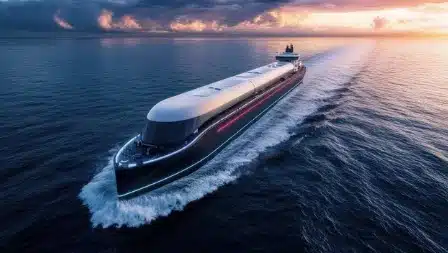
Autonomous solar powered cargo ship - reduce greenhouse gas concept

Diana Stinson on GHG in Shipping